
ThePomposa Abbey, located in the municipality of Codigoro, is one of themost important monastic complexesin Northern Italy.
The History of the Abbey
Its origins date back to the6th-7th century, about 1,300 years ago according to some sources, when groups ofBenedictine monkssettled in the area, which was then surrounded by the waters of the Po River.
The first certain historical document confirming its existence is aletter from Pope John VIII from 874, addressed to Emperor Louis II.
The abbey began to develop in the9th century, and in1026it was officially consecrated, becoming a religious and cultural center of great importance. The monkGuido of Arezzolived here; he revolutionized musical notation by introducing thetetragram, the basis of modern musical writing.
During the Middle Ages,Pomposawas a point of reference for pilgrims, nobles, and emperors. However, in the15th century, the area was struck by malaria and swamping, leading to the abbey’s decline. In1653, Pope Innocent X decreed its suppression, and in1802it was purchased by the Guiccioli family.
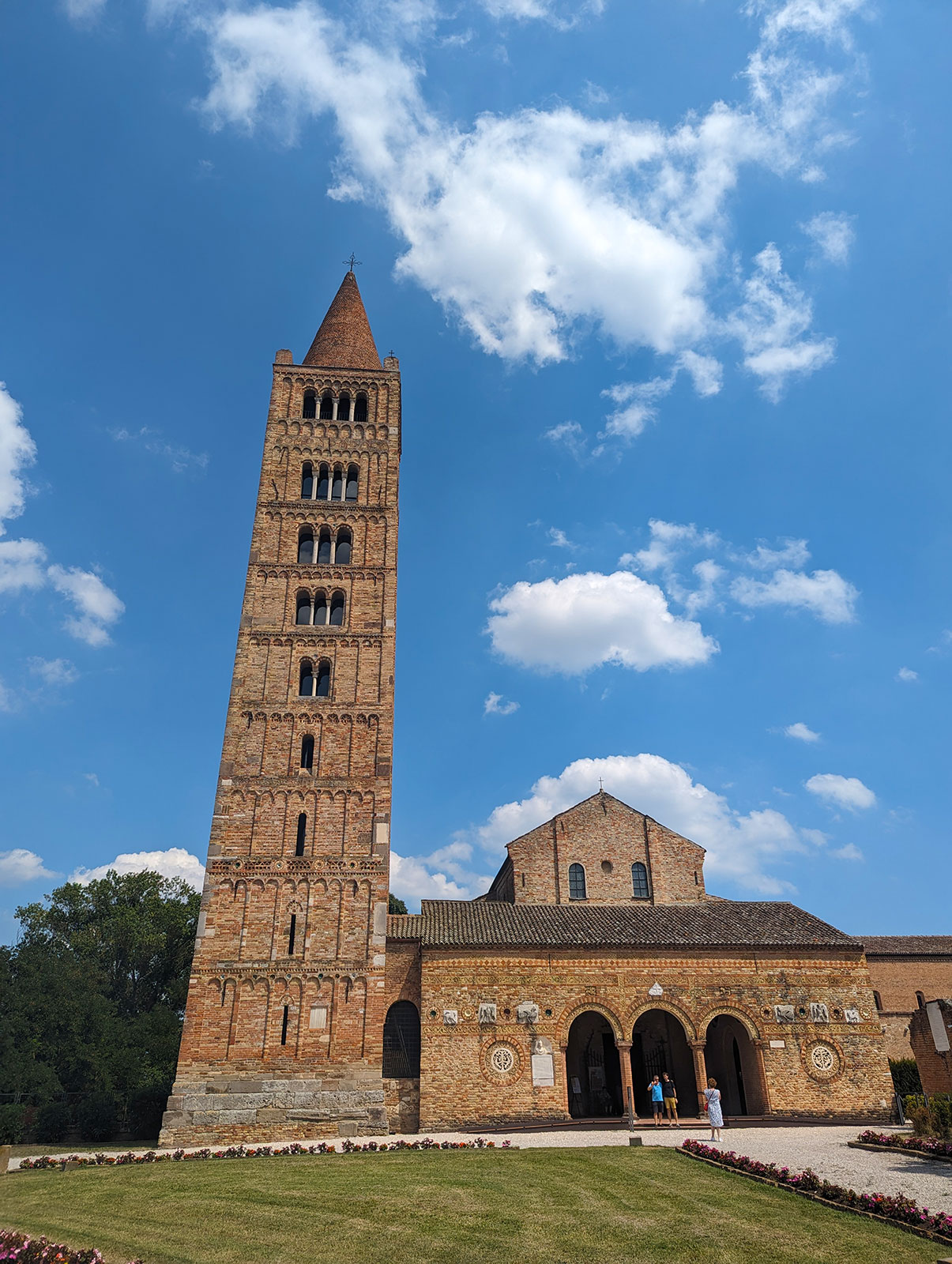
Photo by Federico Banzi
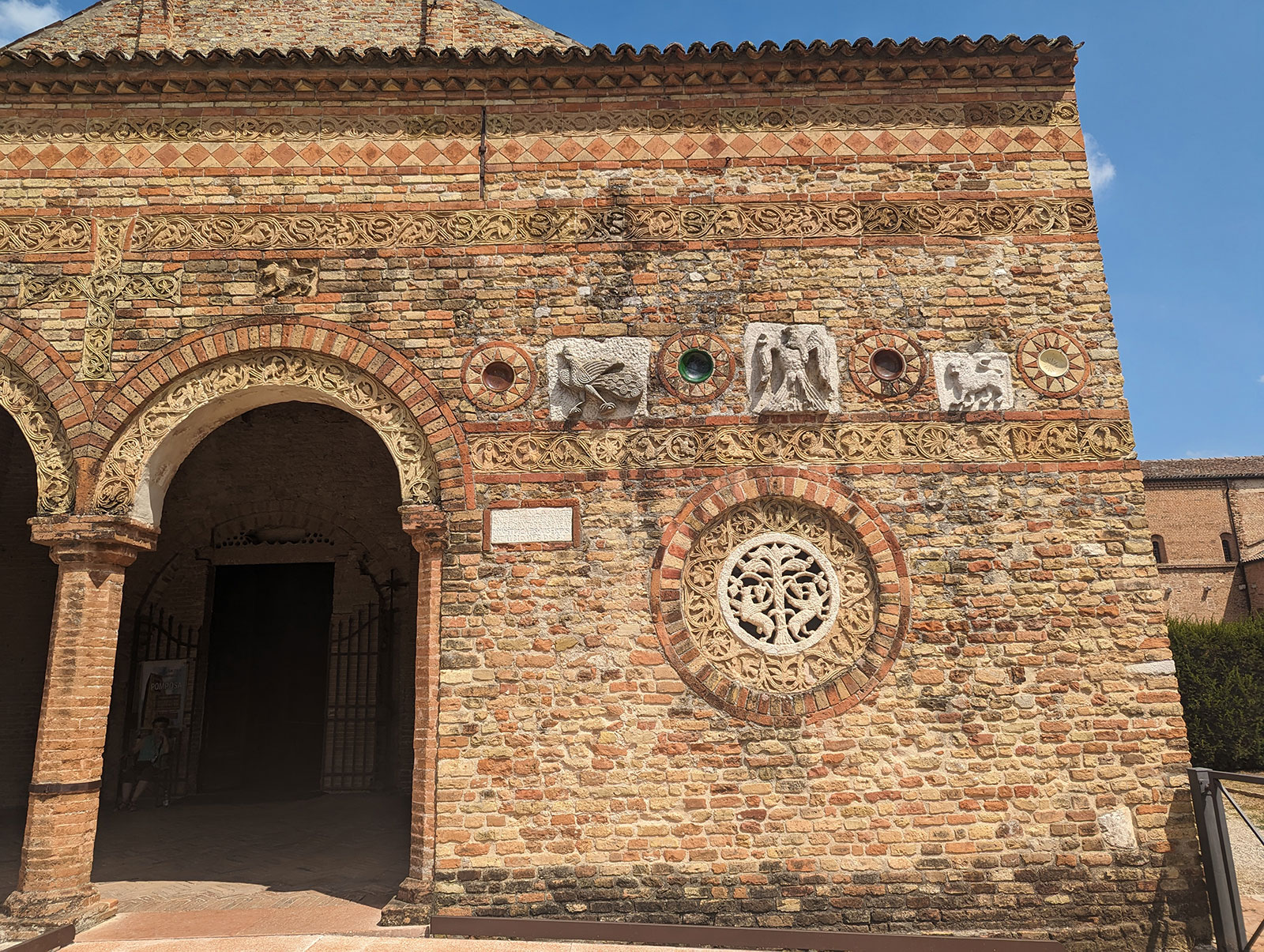
Photo by Federico Banzi
What to see at Pomposa Abbey
ThePomposa Abbeypreserves numerous works of art of great historical and artistic value, testifying to its importance in the medieval cultural landscape. Inside theBasilica of Santa Maria(the oldest core of the basilica, dating back to the 7th–9th centuries), there is a cycle of paintings attributed to theGiotto school, featuring scenes from the Bible, the Saints, and the Last Judgement from the 14th century.
Thefrescoesdecorate the walls and the apse, and are among the most important examples of medieval painting in Emilia-Romagna. Theceilingis a masterpiece of wooden craftsmanship, decorated with geometric and symbolic motifs. Whitemarble columnsseparate the church’s three naves, featuring carved Romanesque-style capitals.
In thePomposiano Museum, next to the abbey, you’ll find:illuminated manuscriptscreated by the monastic scribes, liturgical artifacts, and sculptural fragments dating back to the 10th–14th centuries, as well as sacred goldsmith works and cult objects.
The48-meter-high bell tower, built in 1063, is decorated with mullioned windows (bifore, trifore, and quadrifore) that increase in size towards the top, creating an effect of lightness.
How to get there
There are several ways to reach thePomposa Abbeyfrom Ferrara, depending on your time and preference.
By car
This is certainly the most comfortable and fastest route; it’s about50 kmand there areno motorway tolls.
By train + bus
Take the train fromFerrara to Codigoro, then a bus to theLOVARAstop, which is the closest to the site. The cost is between€6 and €12.
By bicycle
The distance is about50 km, with a travel time between2 hours 30 minutes and 3 hours 30 minutes, depending on your pace and stops. The route is mainly paved, with some well-marked sections ofdirt roadandcycle/pedestrian path. The recommended itinerary is as follows:
Start from Ferrara:Follow the cycle path along thePo di Volanoriver branch.
Cross the villages ofMigliarino, Migliaro, Massa Fiscaglia.
Arrive atCodigoro, then continue along the cycle path until you reach thePomposa Abbey.
Abbey Entrance Fee
Weekdays (Tuesday – Saturday)
Full Price:€5.00
With Guide:€7.00
Holidays (Sundays and Public Holidays)
8:30 AM to 10:30 AM:Free entrance to the church
Until 12:00 PM (Noon):€1.50 (the church is closed for the 11:00 AM Mass)
12:00 PM (Noon) to 7:30 PM:€3.00
With Guide:€5.00
Reduced Rates
Youth (Ages 18-25):€2.00
Minors (Under 18):Free entrance
Other concessions and reductions as established by current regulations.
Free Entry
First Sunday of the Month:Free entrance for everyone.
Please Note:Entry may not be permitted during religious services.