
TheWalls of Ferraraare one of the most imposing Renaissance wall circuits in Italy, stretching for approximately9 kmaround the historic center. The walls reach heights of between 6 and 10 meters, while theBarco Tower(Torrione di Barco) andSaint John’s Tower(Torrione di San Giovanni) are even more impressive due to their defensive structures.
The construction of the walls began in the4th centurywith theByzantines; their purpose was to defend the river ferry on the Po. In the10th century, new walls were added by Tedaldo di Canossa to protect two river landings and the expanding urban core.
Only in the13th century, under the rule of theEste family, did Ferrara truly take on the appearance of a fortified city. This transformation was largely due to the work ofBiagio Rossetti, carried out between the late 1400s and early 1500s with theHerculean Addition(Addizione Erculea), which focused on the northern part with bastions and towers.
After 1512,Alfonso I d’Estebuilt the eastern walls and strengthened the defensive system with bulwarks and moats. Later, in 1575,Alfonso II d’Estereinforced the southern walls with structures like theBulwark of Love(Baluardo dell’Amore) and theBulwark of Saint Peter(Baluardo di San Pietro).
After Ferrara’s transition to the Papal States, between 1608 and 1618,Pope Paul Vcommissioned the construction of the southernmost stretch of the walls, completing the defensive circuit.
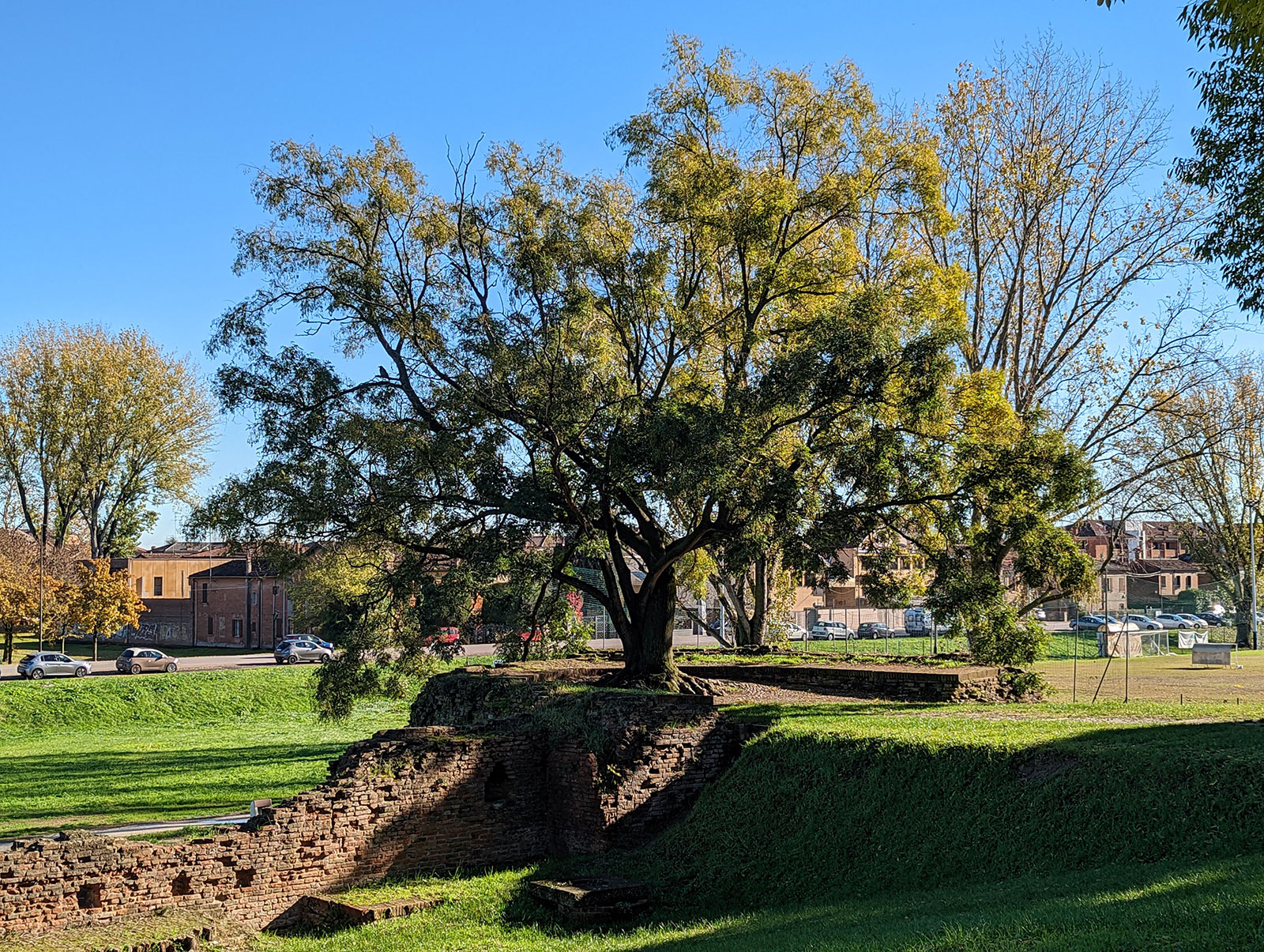
Photo by Federico Banzi
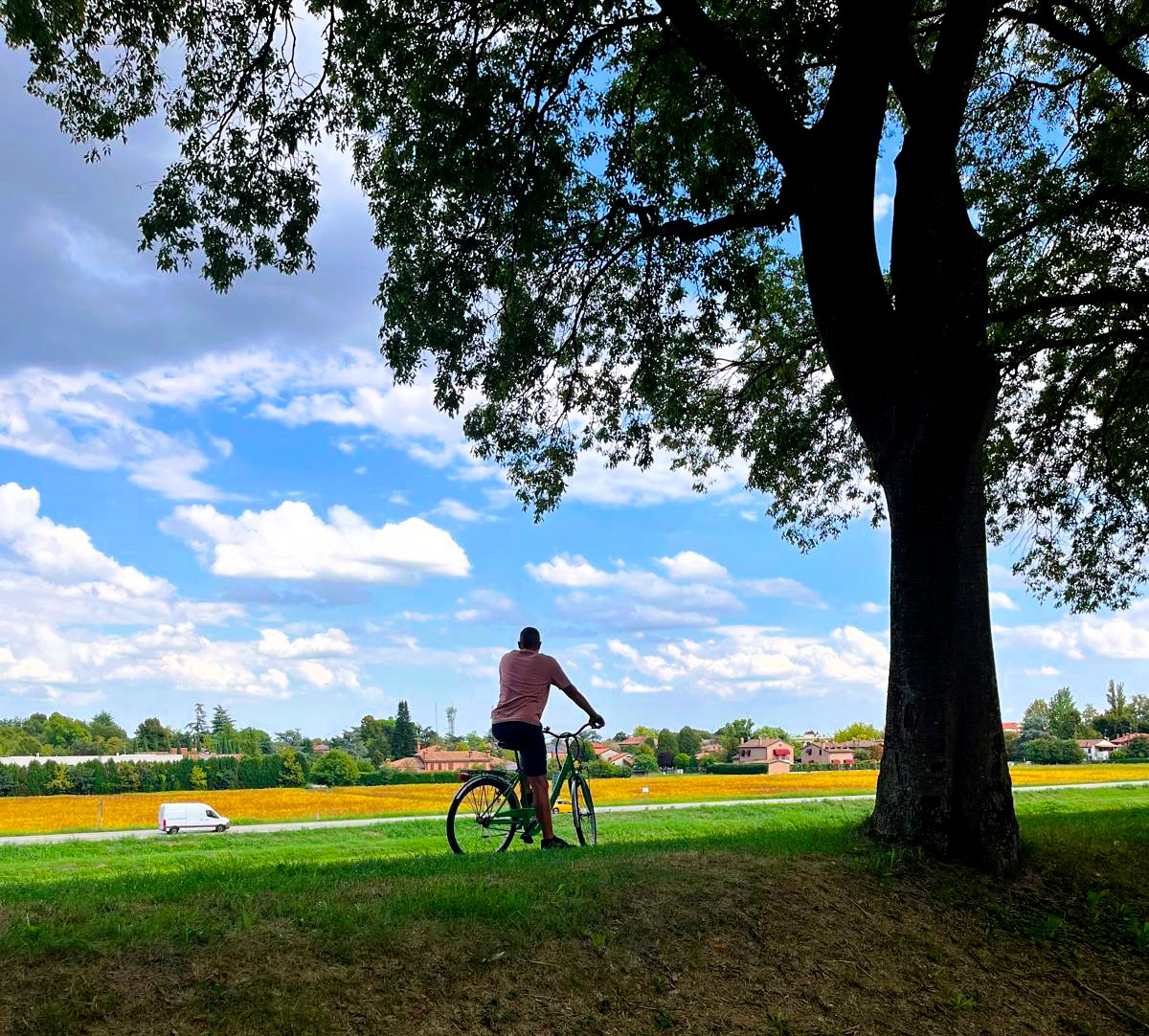
The Walls today
The Walls of Ferrara have endured centuries to achieve the appearance we know today, an evolution driven by the city’s constant expansion. Today, weakened towers and bulwarks are being restored to allow citizens and tourists to admire some of thebest-preserved medieval walls in Italy. If we were to date these fortifications, we could say they are over1000 years oldfrom the beginning of their construction and400 years oldin their current form.
In the 19th century, the walls lost their military function and became a place for promenades and recreation. Today, they form a largeurban park, complete with cycle paths and green areas.
To access the walls and enjoy the greenery that characterizes our city, simply use the various entrances found on every corner of the city:Porta Paola,Porta Romana, orPorta degli Angeli, for example. Alternatively, you can reach theUrban Park, a former hunting reserve of the Este family, and stroll from there, enjoying the green and quiet countryside feel right within the city.
Important sights and aspects
- Barco Tower (Torrione di Barco):The largest circular tower, built in 1493, an example of Este military architecture.
- Saint John’s Tower (Torrione di San Giovanni):Today, it hosts theJazz Club Ferraraand is one of the most picturesque spots for views over the city.
- Mountain Bulwark (Baluardo della Montagna):Once an artillery emplacement, featuring an artificial “mountain” used as a strategic point.
- Bulwark of Love (Baluardo dell’Amore):Shaped like the “Ace of Spades,” it is now home to an archaeological park.
- Bulwark of Saint Peter (Baluardo di San Pietro):The first fortification visible when arriving from Porta Paola, built to strengthen the 15th-century walls.
- The Walls’ Flora:Home to over240 plant species, including many rare ones, thanks to the variety of exposure and humidity along the moat.
- Ducal Baths (Bagni Ducali):A pleasure residence built in 1541, featuring frescoes by artists such asGarofaloandGirolamo da Carpi.
- San Tommaso Conduit (Doccile di San Tommaso):An ancient covered sewer system, constructed in 1524.